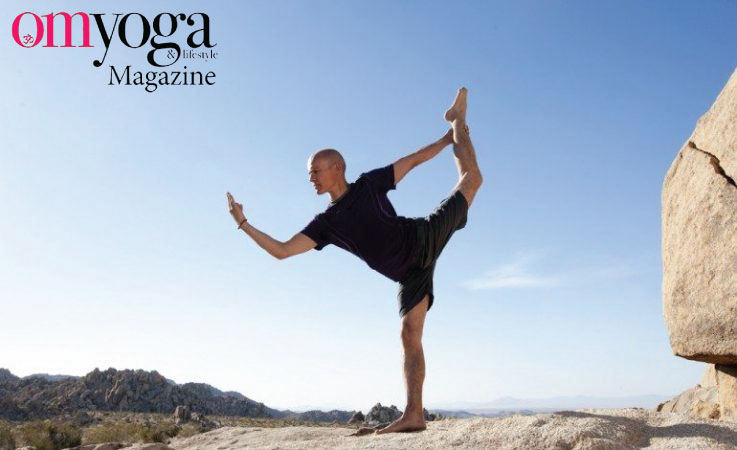
Who needs competition? Jered Seibert says we can still experience that same feeling of winning jubilation each time we step on the mat.
In the post-Trump Brexit era of capitalism, competition is a touchy subject and even more taboo when it comes to yoga. The connection between winning, losing, competition, and judgment is inextricable for most. Besides, how can we have a winner without a loser, how can we label a victory without a competition?
I think this is why many of us turn to yoga. Yoga is taught from a safe space, free from labels, competition and judgement. For many of us, yoga is the only place in our adult lives where we can move freely within our bodies unafraid of the funny shapes we are making. It feels sacrilegious to introduce the idea of winning to a sacred space free from contests and coveted prizes. Yet, what if we could experience the amazing sensations of winning during a yoga class without the anxiety of competition or fear of losing?
The reason you can’t win at yoga is because you have never worked to detach the feeling of winning from the practice of competing. You think of a winner as a person and winning as a thing. I am asking that you consider winning as a unique one-of-a-kind emotion. The simple cause and effect relationship between winning and competing are inexplicably intertwined because our culture and experience has reinforced that many times over. Yoga is a place where we don’t want to feel the stress of competition, the agony of defeat, or the scrutinizing eyes of judgement—this is the exact reason that I found solace from the hyper-competitive financial industry in a yoga studio.
The problem with this is that we end up depriving ourselves of a natural and amazing emotion that can deepen our practice. With the exception of assigning goals to postures, like standing upside-down, the typical release of emotion that follows a win never occurs because we suppress the competitive spirit beforehand. This is why it is so important to think about competition, winning, losing and judgement, as four separate feelings that do not have to coexist.
As an emotion, in and of itself, winning is a feeling of elation; a lightness, a watery-eyed smile that has culminated from hours of practice and years of perseverance. It is the feeling that transpires and builds from the start of time bending; our motions slow, gravity pauses, our breath deepens into waves of compression, and our surroundings become obsolete. Our physical movements start to act out deliberately, through second nature or instinctual thought.
Winning is the feeling when you come out of that; when time resumes, the crowd cheers, the wave breaks, the mile marker passes, breathing takes over, adrenaline releases, and gravity resumes. You look around and remember where you were after several moments of complete mind-body isolation free from worry about who was watching and what just happened around you. You experience all of the work, all of the challenges, all of the struggles, and everything you’ve accomplished pulsating through your body at once. It is a moment of inexplicable euphoria. When you let go of it all, you can feel the win. It’s hard to imagine another feeling that defies all physics of time and is more present-moment than this. To know that many yogis deprive themselves of it at the risk of feeling competitive or judged is disheartening. While I believe it is possible to retrain our brains and detach winning from competition, for some, the idea just has to be introduced.
Understanding that competition is what usually provides the nerves and excitement that is released upon victory, I’m suggesting that we can find other ways to channel the emotion if we practice. Competition is a feeling that we instinctually possess and has been reinforced to us by society, sports, and academics. Although there can be benefits and detriments to this, winning is different than competing. The competition is fictitious, the competition is physical, and the competition is a means to an anxiety provoking end that our brain tells us determines the fate of whether the activity and our efforts have paid off. It is the buildup, it is the game. The intensity of a competition can be replicated without judgement; the magnitude of a competition can be replicated without an event.
For me, the feeling comes from the excitement that arises when I do my best and I try something new. Oftentimes, it’s an inner competition of self where my body has the final say but my mind will continuously challenge regardless of whether I am by myself or in a crowded studio. The feelings that we experience are real, the activity of the competition is not. If we start to reshape our thoughts, the buildup can almost always result in a win, regardless of the outcome.
Winning is different than judging the outcome. Judgement in yoga occurs from the assignment of finality to postures or the comparison to something else. I used to think the only way to feel a win in yoga is to reach the “end goal,” such as kicking my feet over my head. My competitive intuitions would act up at the most inopportune times and, if achieved, I would experience a short burst of shallow victory. Cue the high fives, party tricks, and Instagram feed. This is not winning, this is gloating.
We have been told that when we fall in yoga, or in life, we make the most progress. It is hard not to feel silly, sad, or even embarrassed, since that is what we have practiced for years. I believe we can train our mind to release different emotions than what we rehearse if we start telling ourselves something different. We can experience the feeling of winning when we sit in child’s pose, take a break, take a fall, or stop short. We just need to control our mind to celebrate this threshold, mark this milestone, and get a glimpse of this growth.
This can take years of practice but it can create a lifetime of happiness. It can happen in yoga, if we let go of what we think we already know.
As published in OM Yoga & Lifestyle Magazine, June 2017
Hi Jered ,
Loved this post . Sharing it on my Facebook and Pinterest profile.
Namaste
Jered says
Greetings in Rishikesh!
Happy to hear you enjoyed it. Thanks so much for sharing and taking the time to read.
Yoga is either super relaxing or a really wonderful workout for me. Depending on my goal for it. Positively more than stretching! Nice post. well written.
Thanks for letting me share some word here!
Jered says
Thank you for the compliment and taking the time to read. It’s ironic, the outcome is often far different than my expectation. At times, my body will work much harder than I thought, or when I am feeling strong, I’ll run out of energy quickly. Most of time whenever I have a ‘goal’ going in, something very different happens. I think that’s why I love showing up and seeing where it takes me.
Nice! Thnx for sharing…Importance of yoga in daily life is such that if it is practiced regularly, it will bring a positive change in your life.
Nice work! Thanks for sharing this article and the Importance of yoga in our daily life if it is practiced regularly, it will bring positive energy and transformation of life-style.